
LEVERAGE
Law Enforcement for Sustainable Viable Ecosystems and Biodiversity Resilience through Multi-Sectors Engagement
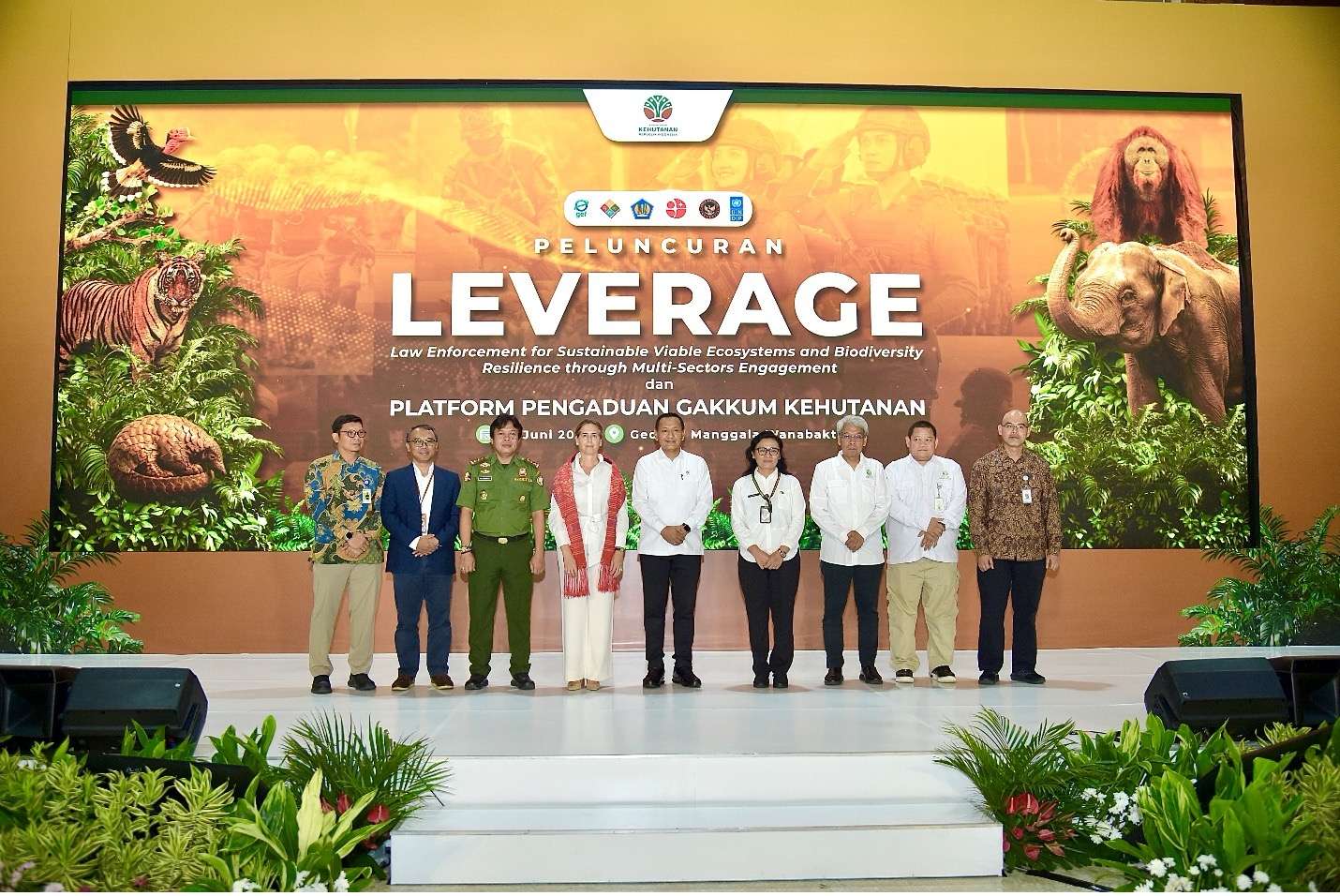
About LEVERAGE
Indonesia's biodiversity is under severe pressure from human activities, particularly poaching and the illegal wildlife trade (IWT). These crimes often involve organized networks operating across regions and national borders, and include the poaching of protected species, the possession of protected wildlife, and the trade in live animals and their parts. Their impact goes beyond significantly reducing species populations: they also disrupt the balance of ecosystems, increase the risk of zoonotic diseases, and cause economic and social losses.
The Government has undertaken a range of efforts to enforce the law against wildlife crime. However, stronger collaboration is needed to increase resources, build political commitment, and strengthen inter-agency cooperation so that these efforts achieve a more significant impact. The Directorate General of Forestry Law Enforcement, in partnership with the United Nations Development Programme (UNDP) Indonesia, initiated the project “Law Enforcement for Sustainable Viable Ecosystems and Biodiversity Resilience through Multi-Sectors Engagement” (LEVERAGE) as part of the GEF-8 Global Wildlife Program (GWP).
The LEVERAGE project aims to strengthen collaborative and integrated law enforcement through the engagement of stakeholders at all levels to protect biodiversity from the threat of extinction, while promoting positive behaviour change towards wildlife conservation and public health, and advancing gender equality. By strengthening collaboration among stakeholders, integrating innovative technologies, and improving governance frameworks, the project ensures that Indonesia is prepared to protect its biodiversity, mitigate zoonotic risks, and improve the welfare of local communities.
The project works through four components to achieve its objectives:
- Component 1 strengthens the law enforcement system by reinforcing policies, regulatory frameworks, and the governance of integrated law enforcement related to wildlife.
- Component 2 promotes effective collaboration among stakeholders in wildlife protection. This is pursued through a range of efforts to build institutional capacity and improve the coordination of law enforcement related to wildlife and biodiversity protection.
- Component 3 focuses on protecting wildlife habitats, preventing biodiversity loss, and controlling the risk of zoonotic diseases. Through its activities, critical wildlife habitats are expected to be managed and protected effectively, and wildlife supply chains managed to reduce the risk of zoonotic disease transmission and safeguard human health.
- Component 4 facilitates knowledge exchange to drive transformational results. It is expected to advance knowledge and technology in the law enforcement system and in integrated decision-support systems.