
LEVERAGE
Law Enforcement for Sustainable Viable Ecosystems and Biodiversity Resilience through Multi-Sectors Engagement
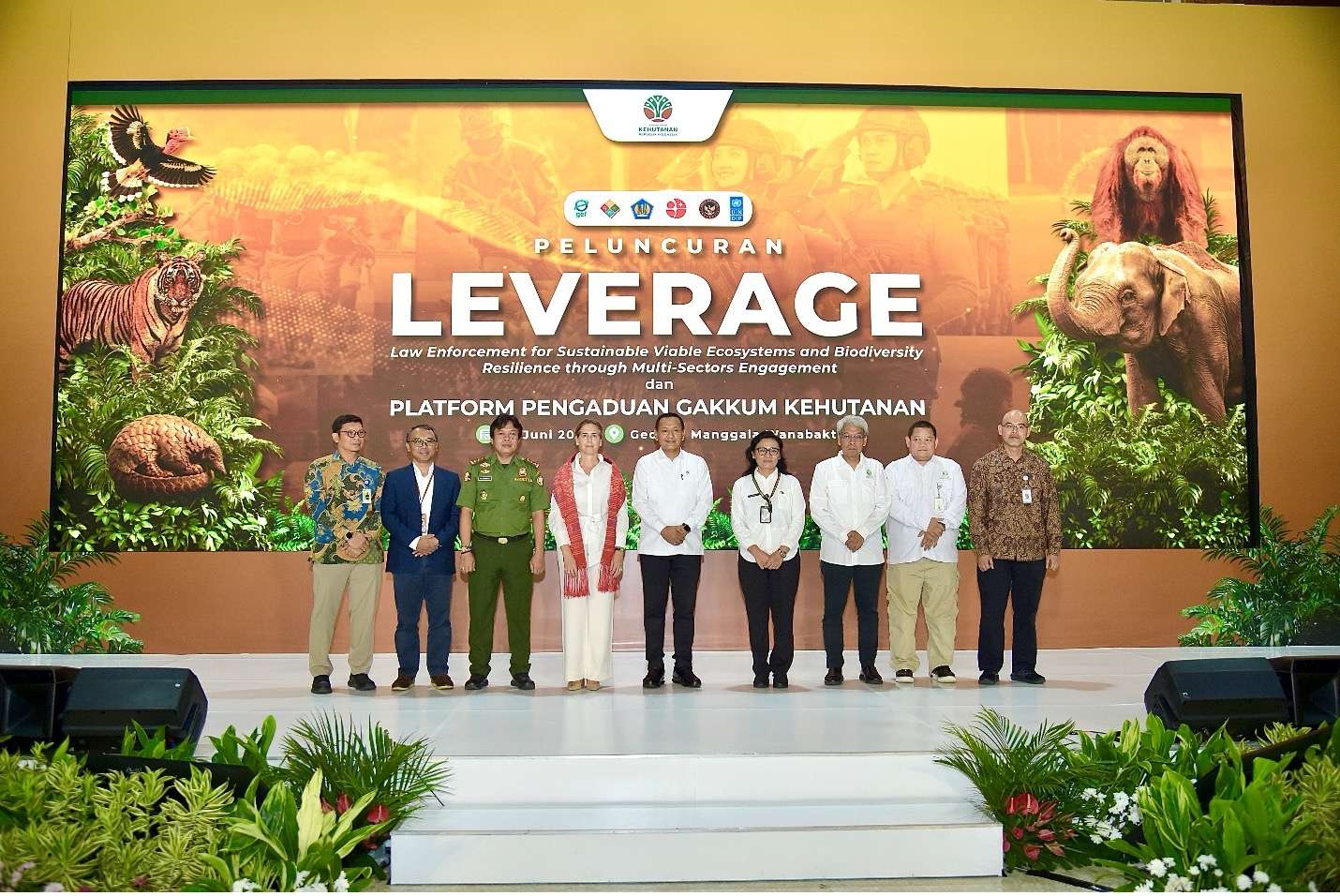
LEVERAGE Officially Launched, Forestry Law Enforcement Enters the Era of Digital Collaboration
JAKARTA - The Ministry of Forestry has launched LEVERAGE (Law Enforcement for Sustainable Viable Ecosystems and Biodiversity Resilience through Multi-Sectors Engagement), a collaborative project, together with a digital Forestry Law Enforcement (Gakkum) Complaint Platform to strengthen forestry law enforcement and biodiversity protection in Indonesia.
The launch, held in Jakarta on Wednesday (10/6/2026), is part of efforts to strengthen forest governance through cross-sector collaboration, the use of information technology, and greater public participation in monitoring forest resources.
Opening the event, Deputy Minister of Forestry Rohmat Marzuki expressed appreciation for the support of the United Nations Development Programme (UNDP) through the Global Environment Facility (GEF) 8 in helping strengthen Indonesia's forestry law enforcement system.
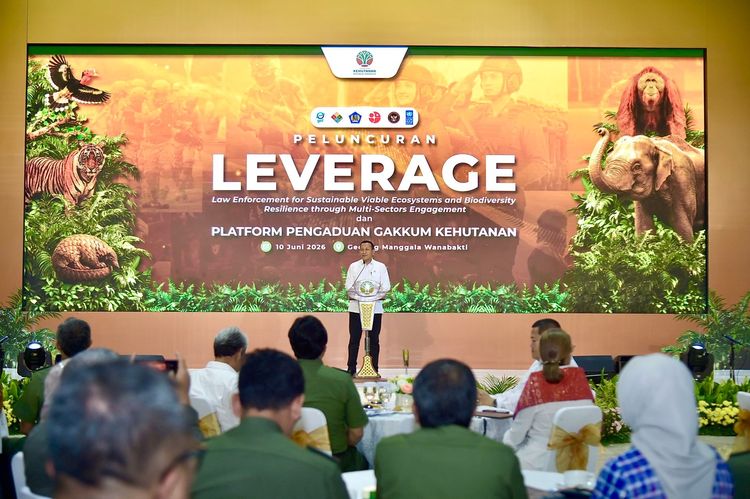
According to Rohmat, the LEVERAGE project must be in line with the national forestry development agenda, Indonesia's FOLU Net Sink 2030 target, the Sustainable Development Goals (SDGs), and the country's commitment to biodiversity protection.
“Make sure this project is aligned with the national forestry development agenda, Indonesia's FOLU Net Sink 2030 commitment, the SDG targets, and our biodiversity conservation policies,” Rohmat said.
In addition to launching the LEVERAGE project, the Ministry of Forestry also introduced the Forestry Gakkum Complaint Platform, which allows the public to report alleged forestry violations and crimes online. The system is designed so that the public can track the progress of how their reports are handled in a transparent and real-time manner.
Rohmat stressed that habitat protection must be the main foundation of every conservation program. In his view, the survival of wildlife depends heavily on habitats remaining well preserved.
He also called for stronger law enforcement based on cross-sector collaboration that makes use of modern technology, including enhanced intelligence, cyber patrols, criminal network analysis, and cooperation among law enforcement agencies.
“Promote collaborative cross-sector law enforcement, including strengthened intelligence, cyber patrols, network analysis, and cooperation among law enforcement officers,” he said.
On the same occasion, Rohmat underlined the importance of involving communities living around forest areas as key partners in prevention, reporting, conflict mitigation, and sustainable forest management.
He also asked that lessons learned from the LEVERAGE project be integrated into the Ministry of Forestry's internal capacity development system through its Corporate University, so they can be replicated nationally to improve the competence of Forest Rangers (Polhut) and Civil Servant Investigators (PPNS).
Regarding the newly launched complaint platform, Rohmat emphasized that every public report must be handled quickly, professionally, and measurably.
“This complaint platform must be managed with discipline and integrity. Every complaint from the public needs to be handled promptly, following clear standards, measurable response times, and effective coordination,” he stressed.
Rohmat further stated that the government is paying close attention to strengthening forestry law enforcement, including a plan to add 21,000 Forest Ranger personnel to support the monitoring of forest areas and the protection of natural resources.
Director General of Forestry Law Enforcement Dwi Januanto Nugroho said that forestry crimes cannot be tackled in a piecemeal manner. For this reason, LEVERAGE has been designed as a national framework that connects various stakeholders within a single, integrated law enforcement ecosystem.
“The Ministry of Forestry is only one subsystem with various limitations. Therefore, we must build a complete forestry law enforcement ecosystem through multi-sector collaboration,” Dwi said.
He added that cooperation will be expanded with various institutions, including the police, the prosecutor's office, the Ministry of Finance, and the National Research and Innovation Agency (BRIN), guided by the principles of mutual respect, mutual trust, mutual benefit, and shared responsibility.
Meanwhile, UNDP Indonesia Resident Representative Sara Ferrer Olivella said that biodiversity protection is directly linked to community welfare and climate resilience.
“Protecting wildlife and their habitats means protecting people's livelihoods, climate resilience, and the future of Indonesia's development. Through LEVERAGE, UNDP supports the Indonesian government's efforts to strengthen cross-sector collaboration to safeguard the ecosystems that form the foundation of community welfare,” she said.
Through the launch of LEVERAGE and the Forestry Gakkum Complaint Platform, the Ministry of Forestry hopes that the monitoring, reporting, and prosecution of all forms of forestry crime can be carried out more effectively, transparently, and participatively in support of sustainable forest management.
LATEST NEWS
 11 June 2026
 7 April 2026